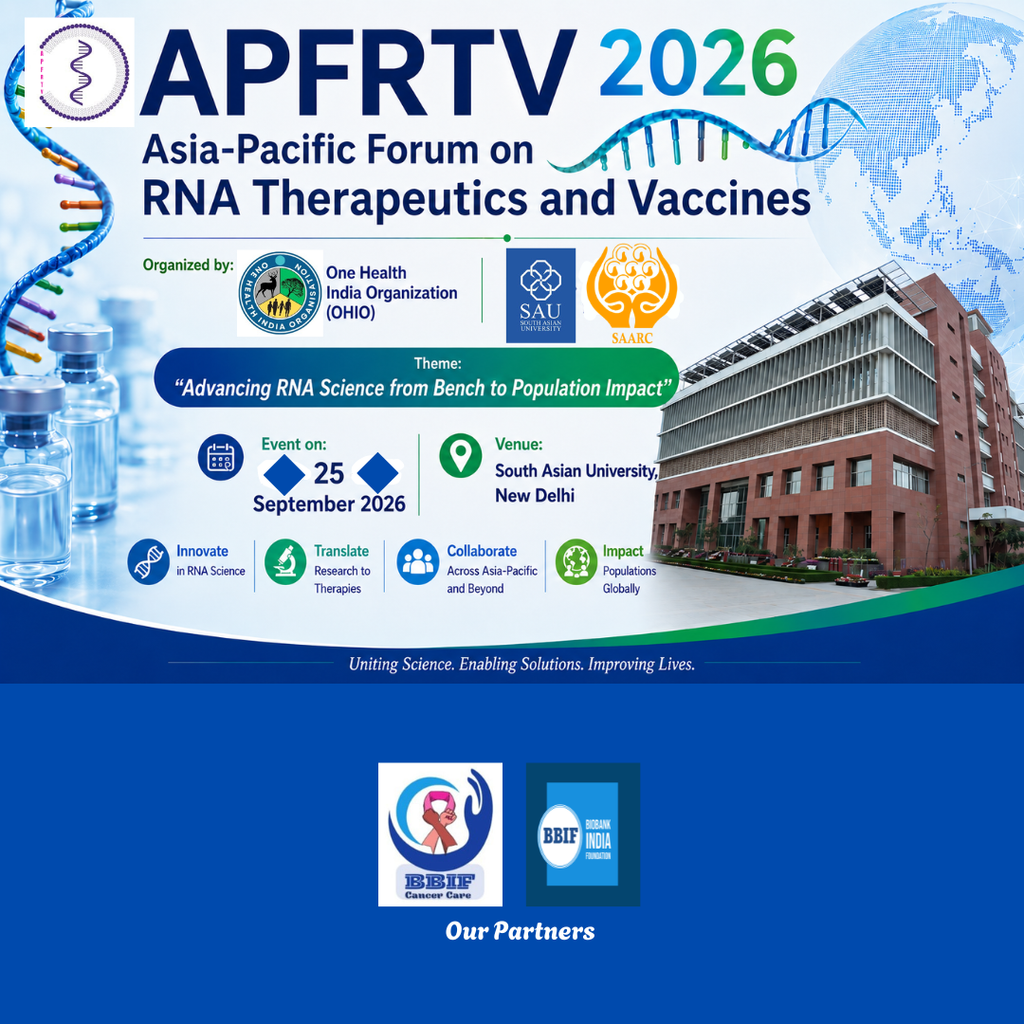
APFRTV 2026 – Asia-Pacific Forum on RNA Therapeutics and Vaccines
Theme: “Advancing RNA Science from Bench to Population Impact”
Click here – APFRTV 2026 Abstract Book
Click here – APFRTV 2026 Brochure
See here – APFRTV 2026 Schedule
About the Conference
APFRTV 2026 is a multidisciplinary scientific forum bringing together researchers, clinicians, industry leaders, innovators, and policymakers from across the Asia-Pacific region. The conference focuses on advancing RNA vaccines and RNA therapeutics, while also embracing a broader landscape of next-generation vaccines, biologics, and translational health innovations.
The forum aims to bridge the gap between discovery and real-world application by fostering collaboration, knowledge exchange, and strategic partnerships. With a strong emphasis on the One Health approach, APFRTV 2026 will explore integrated solutions that address human, animal, and environmental health challenges.
Objectives
•Showcase advancements in RNA vaccines and RNA therapeutics
•Promote interdisciplinary collaboration across sectors
•Explore complementary vaccine platforms and emerging technologies
•Address translational pathways from bench to bedside
•Strengthen regional and global partnerships


Program Overview
Day 0 – Pre-Conference Workshops (September)
Theme: Capacity Building & Prevention
Workshop 1: From Sample to Signal: RNA to Real-Time Detection & CRISPR Design”
Workshop 2: Breast Cancer Screening & Awareness Workshop
Day 1 – Scientific Sessions (25th September)
Theme: RNA Science & Therapeutics
RNA Vaccine Platforms
RNA Therapeutics (Oncology, Infectious & Rare Diseases)
Delivery Systems & Nanotechnology
AI & Bioinformatics in RNA Design
Translational Research
Day 2 – Integration & Impact (September)
Theme: Innovation, Policy & Population Health
Next-Generation & Complementary Vaccine Platforms
Manufacturing & Scale-Up
Public Health, Policy & Vaccine Equity
One Health & Zoonotic Diseases
Academia–Industry–Policy Collaboration
Highlights
•Plenary lectures by global experts
•Interactive scientific sessions & panel discussions
•Startup Innovation Showcase & Pitch Session
•Industry exhibitions and networking opportunities
•Pre-conference hands-on workshops
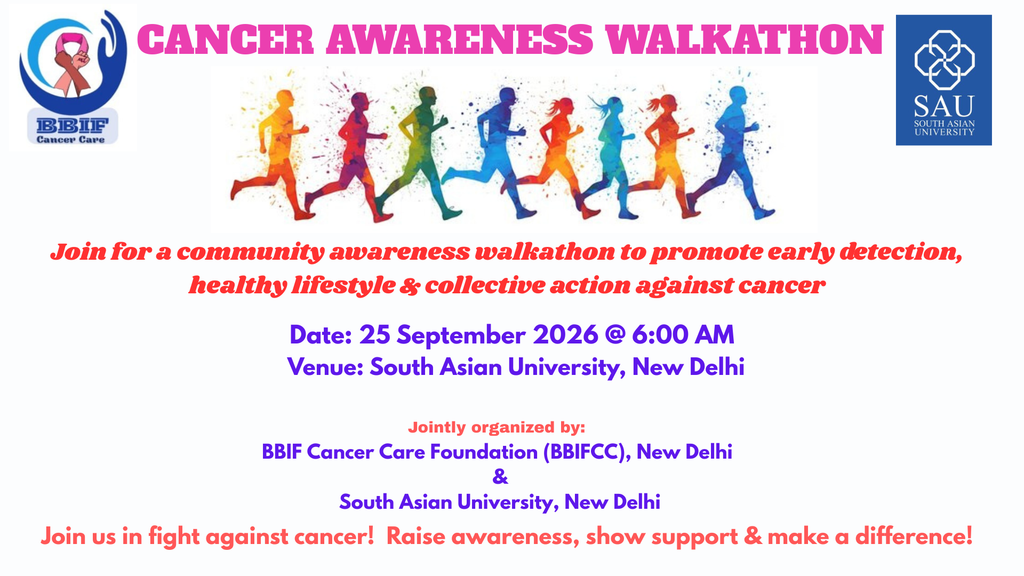
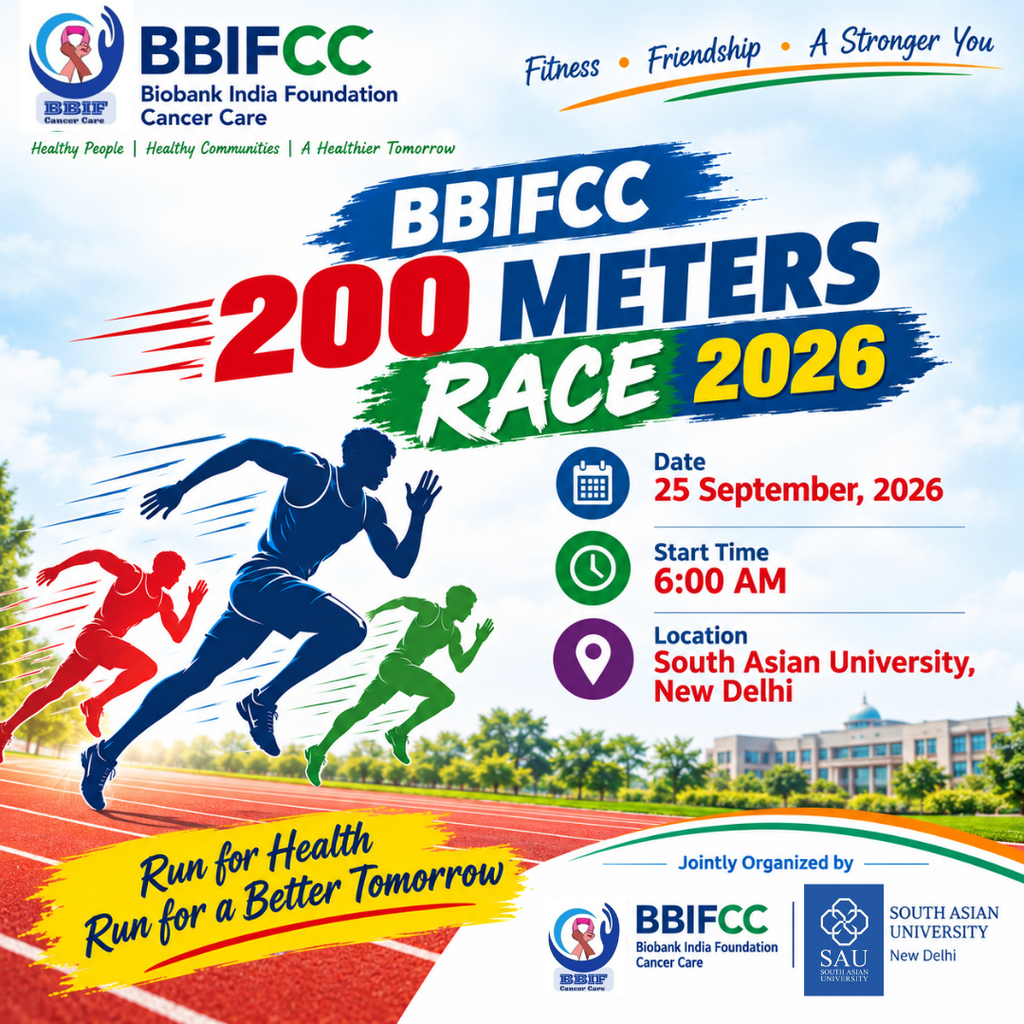
•Cancer Awareness Marathon (26th September 2026)
Who Should Attend
•Researchers & Scientists
•Clinicians & Healthcare Professionals
•Biotech & Pharma Industry
•Startups & Innovators
•Public Health Experts
•Policymakers & Regulators
•Students & Early-career professionals
Why Attend
•Stay updated with the latest advances in RNA science and vaccines
•Connect with leading experts and organizations
•Explore collaboration, funding, and partnership opportunities
•Showcase your research, innovations, and technologies
•Contribute to advancing translational science and public health
Conference Focus
RNA vaccines and RNA therapeutics at the core, complemented by diverse vaccine platforms and emerging technologies to enhance translational impact and global health outcomes.

Click Here to Register
ONLY FOR STUDENTS OF SOUTH ASIAN UNIVERSITY, NEW DELHI:
Submit Your Abstracts (Students, SAU) – Click Here
For Conference Registration (Students, SAU) – Click Here
| Registration Type | Early Bird Fee (INR)Till 10 Sept. | Regular Fee (INR)Till 15 Sept. | Extended Regular Fee (INR)Till 24 September | On-the-Spot Fee (INR)25 September | ==== | ==== |
| Member (Practitioner / HOD / Dean / Faculty / Professor / Assoc. Prof. / Asst. Prof. / Scientists) | ₹3,500 | ₹5,500 | ₹6,000 | ₹6,500 | ==== | ==== |
| Non-Member (Practitioner / HOD / Dean / Faculty / Professor / Assoc. Prof. / Asst. Prof. / Scientists) | ₹4,800 | ₹6,500 | ₹7,000 | ₹7,500 | ==== | ==== |
| Student (Undergraduate & Postgraduate) | ₹1,800 | ₹3,500 | ₹4,000 | ₹4,800 | ==== | ==== |
| Research Scholar (PhD / Research Scholar) | ₹3,000 | ₹4,800 | ₹5,300 | ₹5,900 | ==== | ==== |
| Technician / Nurse | ₹2,000 | ₹3,500 | ₹4,000 | ₹4,800 | ==== | ==== |
| Industry | ₹7,000 | ₹9,500 | ₹10,500 | ₹11,800 | ==== | ==== |
| Industry Group (5+ people) | ₹37,000 | ₹43,500 | ₹49,500 | ₹55,500 | ==== | ==== |
| Foreign Delegates (HICs) | USD 250 | USD 350 | USD 450 | USD 500 | ==== | ==== |
| Foreign Delegates (LMICs) | USD 100 | USD 150 | USD 200 | USD 250 | ==== | ==== |
You can pay your fee on below given A/C details:
Bank A/C details:
Bank Name: Canara Bank
A/C Name: BioBank India Foundation
A/C No: 120000078847
Swift Code: CNRBINBBBFD
IFSC Code: CNRB0019050
Branch: Nirman Vihar, Delhi
GSTIN: 07AAETB3903B1ZC
You can pay online through QR code:

1-Minute Against Cancer – Reels Competition One Minute. One Message. One Life Saved
Click here to submit your reel
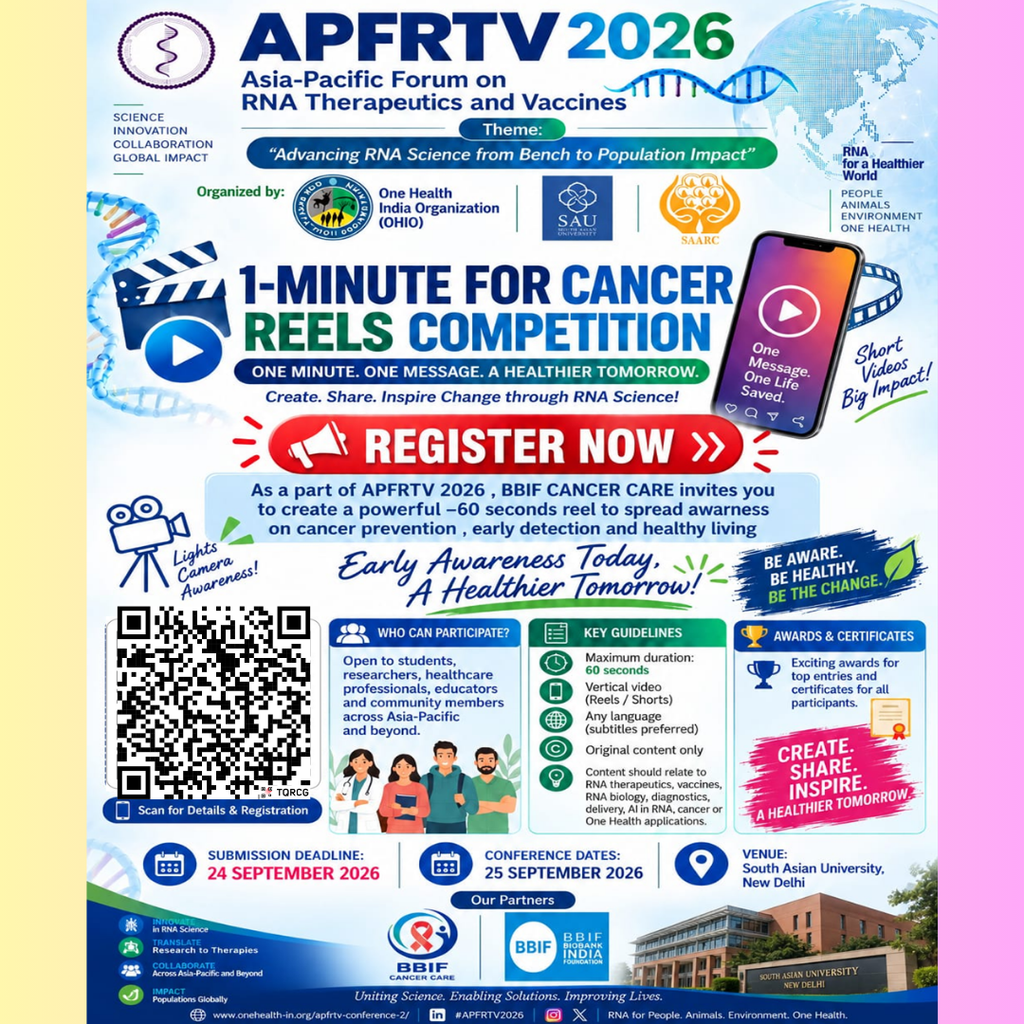
As part of APFRTV 2026, BBIF Cancer Care invites you to create a powerful 60-second reel to spread awareness on Cancer Prevention, Early Detection & Healthy Living.
Who Can Participate
Open to students, healthcare professionals and community members. Key Guidelines:
Organised by: BBIF Cancer Care, New Delhi & South Asian University, New Delhi
Maximum duration: 60 seconds
Vertical video (Reels / Shorts)
Any language (subtitles preferred)
Original content only
Submission Deadline: 24th September 2026
Important: Conference registration for APFRTV 2026 is compulsory for reel submission.
(Participants who don’t want to register for the APFRTV 2026 can pay INR 500/- only for Reel Competition)
Awards & Certificates: Exciting awards for top entries and certificates for all participants.

Call for Abstracts – APFRTV 2026
Click Here to Submit Your Abstracts
Overview
The Asia-Pacific Forum on RNA Therapeutics and Vaccines (APFRTV 2026) invites researchers, clinicians, industry professionals, innovators, and students to submit abstracts showcasing original research, innovations, and case studies in RNA science, vaccines, and translational health.
The conference places RNA vaccines and RNA therapeutics at its core, while also welcoming contributions from complementary vaccine platforms, biologics, and emerging health technologies.
Abstract Topics Include
•RNA Vaccines (mRNA, saRNA, circular RNA)
•RNA Therapeutics (siRNA, miRNA, ASO, mRNA)
•Delivery Systems & Nanotechnology
•Translational Research & Clinical Development
•Next-Generation & Complementary Vaccine Platforms
•AI, Bioinformatics & Computational Biology
•Manufacturing, Scale-Up & Quality Control
•Public Health, Policy & Vaccine Equity
•One Health & Zoonotic Diseases
•Startup Innovation & Translational Research
•Biobanking, Sample Storage & Cold Chain Logistics
(biospecimen collection, processing, cryopreservation, RNA stability, vaccine storage, quality assurance, regulatory frameworks)
•Open Category: Emerging areas in RNA science and vaccines or Any category related to science
Submission Categories
•Oral Presentation
•Poster Presentation
Guidelines for Submission
•Abstracts must be original and unpublished
•Word limit: 250–300 words
•Structured format: Background, Methods, Results, Conclusion
•All submissions will undergo peer review
•Selected abstracts will be assigned for oral or poster presentation
Important Dates
•Abstract Submission Opens: 1 May 2026
•Abstract Submission Deadline: 16 September 2026
•Notification of Acceptance: 18 September 2026
Awards
Selected abstracts will be considered for:
•Best Oral Presentation Award
•Best Poster Presentation Award
Top 12–15 abstracts will be selected for Oral Presentation. Remaining shortlisted abstracts will be presented as Posters.
Awards (Poster & Oral):
1st Prize
2nd Prize
3rd Prize
Open to researchers, students, clinicians, startups and professionals.
APFRTV TRAVEL GRANTS
To be eligible for a travel grant, the applicant must be a member of APFRTV and the first author of an abstract submitted to APFRTV 2026.
•Students/Young investigator/ Researchers are eligible.
•Conference registration is compulsory at the time of application.
•Deadline – August 31, 2026.
The winner of APFRTV Travel Grant will receive 3rd AC to & fro train ticket from the distance they will be travelling and also reimbursement of conference registration fee.
To submit your application Click Here
*Please note that the Travel Grants may not cover all travel costs. Travel grant awardees need to arrange their accommodation. The Travel Grants will be issued to successful applicant after the conference.

APFRTV 2026 Awards & Recognition
Application deadline: 31 August 2026
Click Here to Apply
APFRTV 2026 Awards Categories:
* Lifetime Achievement Award
* Oral Presentation Award (1st, 2nd & 3rd Prize)
* Best Poster Presentation Award (1st, 2nd & 3rd Prize)
* Young Scientist Award
* Innovation in RNA Therapeutics Award
* Innovation in RNA Diagnostics Award
* Excellence in Vaccine Research Award
* BBIFCC Cancer Awareness Marathon Award (1st, 2nd & 3rd Prize)

Pre-Conference Workshops (24th September)
Workshop 1:
From Viral RNA to Diagnosis: Hands-on RT-LAMP Workshop for Measles and Rubella Virus Detection
APFRTV 2026 Registered Delegates Fee: INR 1500/-
APFRTV 2026 Non-Registered Delegates Fee: INR 4000/-
Format: Hands-on + Demonstration + Interactive Sessions
Registration Deadline: 31 August 2026 (Seats: 40 Only)
Click Here To Register
This intensive hands-on workshop is designed to provide participants with practical training in From Viral RNA to Diagnosis: Hands-on RT-LAMP Workshop for Measles and Rubella Virus Detection.
The workshop will cover the complete diagnostic workflow, from viral RNA extraction and quality assessment to RT-LAMP assay setup, amplification, result interpretation, and troubleshooting. Participants will gain experience with sample handling, nucleic acid extraction techniques, reaction optimization, quality control measures, and biosafety practices relevant to infectious disease diagnostics.
Key Learning Outcomes:
•Principles of RT-LAMP technology and its applications in viral diagnostics
•Viral RNA extraction and quality assessment
•RT-LAMP assay design and workflow
•Detection and interpretation of amplification results
•Quality assurance and troubleshooting in molecular testing
•Applications of RT-LAMP in outbreak surveillance and public health laboratories
The workshop is ideal for postgraduate students, researchers, laboratory professionals, microbiologists, virologists, and public health personnel seeking practical exposure to rapid molecular diagnostic techniques for vaccine-preventable diseases.
Duration: 1 Day Hands-on Training
Key Highlights
Hands-on Viral RNA Extraction
RT-LAMP Assay Setup and Optimization
Measles and Rubella Virus Detection Workflow
Rapid Molecular Diagnostics Techniques
Result Interpretation and Quality Control
Troubleshooting of RT-LAMP Assays
Laboratory Biosafety and Good Laboratory Practices
Applications in Disease Surveillance and Outbreak Response
Training on Low-Cost, Point-of-Care Diagnostic Platforms
Expert-Led Practical Sessions
Interactive Case Discussions
Certificate of Participation
Pre-Conference Workshop – 2
Theme: Breast Cancer Screening & Awareness: Early Detection to Community Impact
Date: 24 September 2026
Format: Demonstration + Interactive Training + Community-Oriented Learning
General Participant Fee: ₹500
Apply for Free Seat (Only for Housewives – Limited to 10 Seats | Subject to Organizing Committee Approval)
Registration Deadline: 31 August 2026 (Seats: 30 Only) Duration: 4 Hours
Click Here To Register
Overview
This workshop focuses on early detection and prevention of breast cancer, equipping participants with essential knowledge and practical skills in screening, awareness, and community engagement.
It emphasizes evidence-based screening practices and public health strategies to improve early diagnosis and outcomes.
Key Learning Areas
1. Breast Cancer Fundamentals
•Epidemiology and risk factors
•Importance of early detection
•Overview of screening pathways
2. Screening & Early Detection
•Breast Self-Examination (BSE) – technique and frequency
•Clinical Breast Examination (CBE) – principles
•Mammography: indications and guidelines
Includes demonstration-based training
3. Awareness & Community Outreach
•Designing effective awareness programs
•Addressing myths, stigma, and barriers
•Role of healthcare providers and NGOs
4. Public Health & Implementation
•Screening program models (urban vs rural)
•Referral pathways and follow-up systems
•Integration with national health programs
Workshop Format
•Demonstration-based learning (BSE/CBE concepts)
•Interactive sessions and case discussions
•Community engagement strategies
Who Should Attend
•Students
•Housewives and community members
•Volunteers and community health advocates
•Nursing staff and allied health professionals
•NGOs and community outreach workers
•Medical students and public health trainees
No prior medical knowledge is required—sessions are designed to be simple, practical, and community-oriented.
Learning Outcomes
Participants will:
•Understand breast cancer risk factors and screening methods
•Gain practical knowledge of early detection techniques
•Develop skills for community awareness and outreach
•Strengthen capacity in screening program implementation
Certification: All participants will receive a certificate of participation upon completion of the workshop.
Why Attend
•Focus on prevention and early detection
•Practical and community-oriented training
•Supports public health impact and awareness initiatives

See APFRTV 2026 Sponsorship Packages
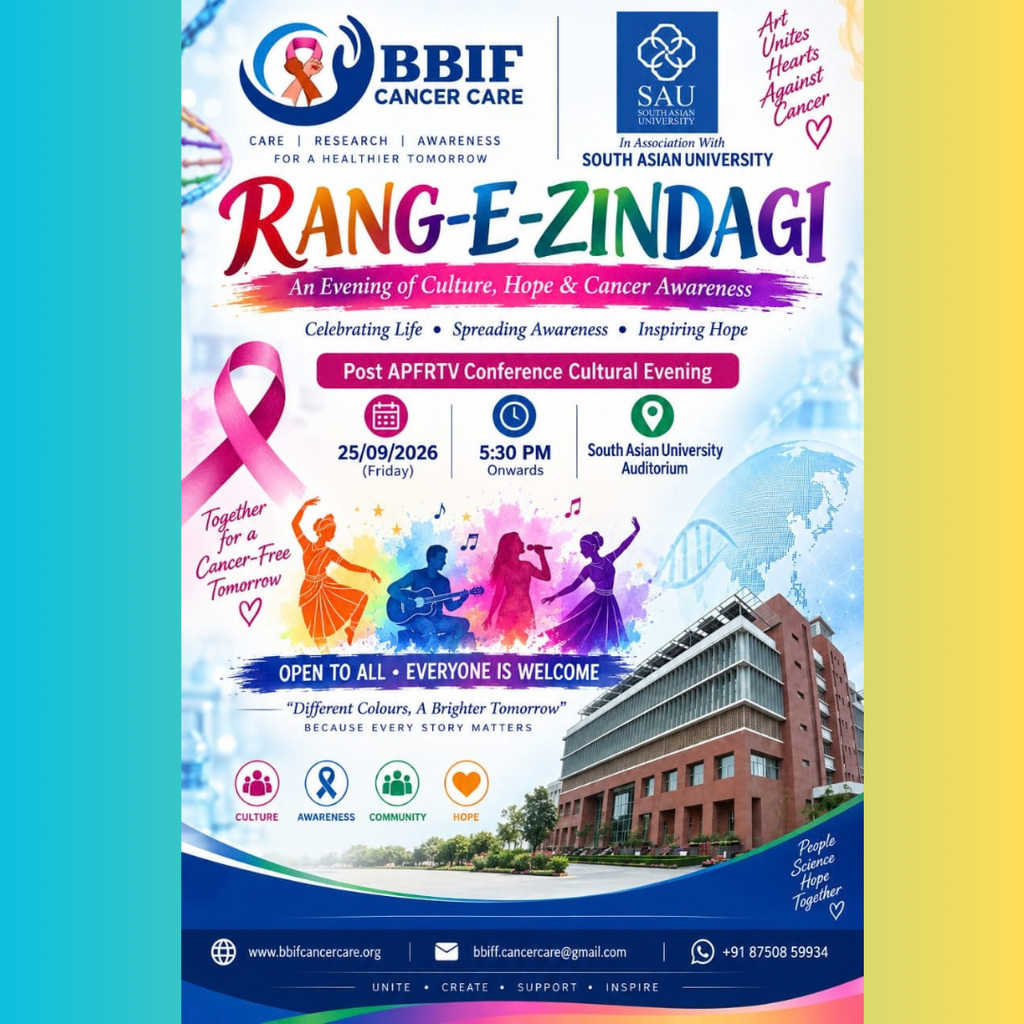
Partner with APFRTV 2026 to support innovation, cancer awareness, community health initiatives, and advancements in RNA therapeutics, vaccines, diagnostics, and public health research. Become a sponsor for the BBIFCC Cancer Awareness Marathon and Breast Cancer Screening & Awareness Workshop to create meaningful community impact.



Click here to Register
Why Join?
Support the cause of cancer awareness
Encourage early detection and prevention
Show solidarity with cancer warriors and survivors
Promote fitness and a healthy lifestyle
Registration Details: Free Registration (Open for all)
T-Shirts for Paid Donors (Support the cause and receive an exclusive event T-shirt)
How Can You Support? Make a Donation – Your contributions will help cancer patients and fund awareness programs.
Get a T-Shirt – Donate and receive a special event T-shirt as a token of appreciation.
Spread the Word – Share the event on social media and invite friends & family!
Event Highlights:
Participation Certificates for All
Special Address by Cancer Survivors
Photo Booth & Media Coverage
Refreshments for Participants
Author

sales.vividtechno@gmail.com